multimeter auto ranging vs manual
Choosing between manual and auto-ranging multimeters depends on experience and needs; auto-ranging simplifies measurements, while manual offers precision for experienced users.
What is a Multimeter?
A multimeter is an indispensable diagnostic tool utilized extensively in electrical and electronics work. Its primary function is to measure various electrical parameters, including voltage, current, and resistance, providing crucial insights into circuit behavior and component functionality. This versatile instrument is essential for troubleshooting electrical issues, verifying power supply outputs, and ensuring the proper operation of electronic devices.
Fundamentally, a multimeter allows users to assess the electrical characteristics of a circuit or component, aiding in identifying faults and confirming correct functionality. Modern multimeters come in two primary modes regarding measurement scaling: manual ranging and auto ranging. Understanding these differences is key to selecting the right tool for a specific task, as each mode offers distinct advantages depending on the user’s expertise and the application’s requirements.
The Importance of Range Selection
Accurate range selection is paramount when using a multimeter, directly impacting the precision and reliability of measurements. If the selected range is too low, the multimeter may display an overload indication, preventing a reading and potentially damaging the instrument. Conversely, a range that’s excessively high can result in a reading with insufficient resolution, obscuring subtle but significant details.
With manual ranging multimeters, the user is responsible for selecting the appropriate range before taking a measurement, demanding a prior estimation of the expected value. Auto-ranging multimeters alleviate this burden by automatically determining and adjusting the range, simplifying the process, especially for those unfamiliar with circuit values. However, understanding range selection remains crucial for interpreting readings and ensuring measurement integrity, regardless of the multimeter type.

Understanding Manual Ranging Multimeters
Manual ranging requires the user to select the measurement range, offering precision but demanding prior knowledge of expected values within the circuit.
How Manual Ranging Works
With a manual ranging multimeter, the user is responsible for setting the measurement range before taking a reading. This involves selecting a specific scale on the multimeter’s rotary dial, corresponding to the anticipated magnitude of the electrical parameter being measured – voltage, current, or resistance. For instance, if measuring a voltage, you might choose between millivolts (mV), volts (V), or even kilovolts (kV).
The user must estimate the approximate value beforehand; selecting a range too low will result in an overload indication, requiring a higher range to be chosen. Conversely, a range that’s excessively high will reduce precision and resolution. Essentially, manual ranging demands a good understanding of the circuit and the expected values to ensure accurate and meaningful measurements. It’s a deliberate process, requiring active participation from the user in the measurement setup.
Advantages of Manual Ranging
Manual ranging multimeters offer distinct advantages, primarily centered around precision and control. By manually selecting the range, users can often achieve higher accuracy, especially when dealing with weak or fluctuating signals. This is because the meter isn’t automatically adjusting, potentially settling on a less-than-optimal range.
Furthermore, manual ranging fosters a deeper understanding of the circuit under test. The user must consider the expected values, promoting a more thoughtful approach to measurement. It can also be more cost-effective, as manual ranging multimeters generally have a lower price point than their auto-ranging counterparts. Finally, some professionals prefer the deliberate nature of manual ranging, feeling it provides greater confidence in the readings obtained.
Disadvantages of Manual Ranging
Despite its precision benefits, manual ranging presents several drawbacks, particularly for beginners or in fast-paced troubleshooting scenarios. The most significant disadvantage is the potential for user error. If the range is set too low, the multimeter may display an overload indication, requiring adjustment. Conversely, a range set too high reduces resolution and accuracy.
This process of range selection can be time-consuming, slowing down measurements compared to auto-ranging models. It also demands prior knowledge or estimation of the expected value, which isn’t always feasible. Incorrect range selection can even damage the multimeter or the circuit being tested. Ultimately, manual ranging requires more skill and attention to detail, making it less user-friendly for those unfamiliar with electrical measurements.
Best Use Cases for Manual Ranging
Manual ranging multimeters excel in situations demanding high precision and control, particularly when dealing with signals of known or predictable values. Experienced technicians and engineers often prefer manual ranging for detailed circuit analysis, calibration work, and low-signal measurements where maximizing resolution is crucial.
It’s ideal for applications where you need to closely monitor subtle changes in a signal, as you’re not relying on the multimeter’s automatic adjustments. Furthermore, manual ranging can be beneficial in environments with electrical noise, as it allows you to lock onto a specific range and avoid fluctuations caused by automatic range changes. Essentially, it’s the preferred choice when accuracy and deliberate control outweigh speed and convenience.

Understanding Auto Ranging Multimeters
Auto-ranging multimeters automatically detect the correct measurement range for a variable, simplifying use and eliminating the need for pre-selection.
How Auto Ranging Works
Auto-ranging multimeters employ sophisticated internal circuitry to determine the optimal measurement range for the selected parameter – voltage, current, or resistance. Unlike manual ranging, where the user must pre-select a range based on an estimated value, auto-ranging devices continuously sample the input signal. This sampling process allows the multimeter to analyze the signal’s magnitude and automatically adjust its internal range settings to provide the most accurate and readable result.
The core of this functionality lies in a series of analog-to-digital converters (ADCs) and range switching components. The multimeter begins with a high range and progressively lowers it until it achieves a sufficient resolution without overloading the circuitry. This dynamic adjustment happens seamlessly and rapidly, presenting the user with a stable and precise reading without requiring any manual intervention. Essentially, the device ‘figures out’ the appropriate scale for you, making it incredibly user-friendly.
Advantages of Auto Ranging
The primary advantage of auto-ranging multimeters is their simplicity and ease of use, particularly for beginners or those unfamiliar with circuit values. Eliminating the need to manually select a range significantly reduces the chance of errors caused by incorrect scaling, such as overload or inaccurate readings. This feature streamlines the measurement process, saving time and effort.
Furthermore, auto-ranging excels in situations where the input signal’s value is unknown or fluctuates. The multimeter dynamically adapts to these changes, ensuring accurate measurements without requiring constant adjustments. This is especially beneficial when troubleshooting complex circuits or working with unstable power sources. The speed and convenience of auto-ranging make it ideal for quick checks and general-purpose electrical work, enhancing efficiency and reducing frustration.
Disadvantages of Auto Ranging
While convenient, auto-ranging multimeters aren’t without drawbacks. They can be slower to settle on a final reading compared to manual ranging, as the device cycles through ranges to find the optimal setting. This settling time can be noticeable when measuring rapidly changing signals or performing quick tests. Additionally, auto-ranging may not always select the most precise range for a specific measurement.
Some users find that auto-ranging can mask a deeper understanding of the circuit being tested. Manually selecting a range forces a consideration of expected values, aiding in troubleshooting. Furthermore, auto-ranging multimeters often consume more battery power due to the continuous range selection process. In certain sensitive applications, the internal circuitry of auto-ranging can introduce slight inaccuracies, making manual ranging preferable for precision work.
Best Use Cases for Auto Ranging
Auto-ranging multimeters excel in situations demanding speed and simplicity, particularly for beginners or general-purpose electrical work. They are ideal for quickly checking voltages in household wiring, testing batteries, or diagnosing basic appliance issues where precise range selection isn’t critical. Their automatic functionality makes them exceptionally user-friendly for those unfamiliar with electrical measurements or who prefer a streamlined testing process.
Auto-ranging is also beneficial when the expected voltage or resistance is unknown. The multimeter automatically adapts, eliminating the risk of damaging the instrument or obtaining inaccurate readings due to an incorrect range setting. They are well-suited for field service technicians who encounter a wide variety of electrical systems and need a versatile, easy-to-use tool for initial diagnostics.

Key Differences: Auto Ranging vs. Manual Ranging
The core difference lies in range selection: auto-ranging multimeters do this automatically, while manual-ranging requires the user to set the appropriate scale.
Accuracy Comparison
Generally, manual ranging multimeters can offer slightly higher accuracy, particularly when a skilled technician carefully selects the optimal range for the measurement. This is because the auto-ranging function relies on algorithms to determine the range, which may not always be as precise as a deliberate manual selection. However, the accuracy difference is often negligible for most common applications and depends heavily on the quality of the multimeter itself.
Auto-ranging multimeters are still highly accurate, and their convenience often outweighs the potential for a minor accuracy improvement with manual ranging. The key is understanding that accuracy isn’t solely determined by the ranging method but also by the multimeter’s internal components and calibration. For many users, the consistent and reliable readings provided by auto-ranging are sufficient, and the risk of selecting an incorrect range with a manual multimeter can actually decrease overall accuracy.
Speed and Efficiency
Auto-ranging multimeters demonstrably excel in speed and efficiency. They eliminate the time-consuming process of manually selecting the appropriate measurement range, allowing for quicker testing and troubleshooting. This is particularly beneficial when dealing with fluctuating signals or rapidly changing circuits where immediate readings are crucial. Technicians can simply connect the probes and obtain a reading without interruption.
Manual ranging, conversely, requires the user to anticipate the expected value and select a suitable range. If the initial range is incorrect, it necessitates adjustment, adding extra steps and slowing down the process. While experienced users may quickly estimate the correct range, it still represents an added layer of complexity. For high-volume testing or situations demanding swift diagnostics, auto-ranging provides a significant advantage in workflow efficiency and overall productivity.
Ease of Use for Beginners
For individuals new to electrical testing, auto-ranging multimeters offer a significantly more user-friendly experience. The automatic range selection removes a substantial barrier to entry, eliminating the need to understand measurement scales or estimate expected values. Beginners can confidently connect the probes and obtain accurate readings without the risk of selecting an inappropriate range and potentially damaging the meter or the circuit under test.
Manual ranging, on the other hand, presents a steeper learning curve. It requires a foundational understanding of electrical units and the ability to interpret measurement scales. Incorrect range selection can lead to inaccurate readings or even meter damage, potentially discouraging novice users. Auto-ranging simplifies the process, fostering confidence and enabling beginners to quickly grasp the fundamentals of electrical measurement.
Impact on Battery Life
Generally, manual ranging multimeters tend to consume less battery power compared to their auto-ranging counterparts. This is because auto-ranging models continuously sample the input signal and adjust the internal circuitry to determine the appropriate range, a process that requires ongoing power consumption. Manual ranging meters, once a range is selected, remain static until the user changes it, minimizing energy expenditure.
However, the difference in battery life is often marginal, especially with modern multimeters utilizing efficient components and power management techniques. The frequency of use and the types of measurements performed have a more significant impact on battery life than the ranging method. For infrequent use, the battery drain from auto-ranging is unlikely to be a major concern, but for prolonged, continuous testing, a manual ranging meter might offer a slight advantage.

Factors to Consider When Choosing
Skill level, project types, budget, and specific measurement needs—voltage, current, resistance—are crucial factors when selecting between auto-ranging and manual multimeters.
Your Skill Level
For beginners venturing into electrical work, an auto-ranging multimeter is undeniably the more user-friendly option. These devices eliminate the guesswork of selecting the appropriate measurement range, automatically adjusting to provide a reading. This simplicity reduces the potential for errors and allows newcomers to focus on understanding basic electrical concepts rather than grappling with range selection.
However, experienced technicians and engineers often prefer the control and precision offered by manual-ranging multimeters. They possess a strong understanding of circuits and expected values, enabling them to efficiently set the range for optimal accuracy. Manual ranging also provides a deeper insight into the circuit being tested, as it requires a more active engagement with the measurement process. Ultimately, your existing knowledge and comfort level should heavily influence your choice.
The Types of Projects You’ll Be Working On

The nature of your projects significantly impacts the ideal multimeter choice. For quick checks, basic household electrical repairs, or automotive work, an auto-ranging multimeter excels. Its speed and convenience are invaluable when dealing with a variety of circuits and unknown values. You can rapidly cycle through measurements without constant adjustments.

Conversely, intricate electronics projects, precision circuit design, or detailed troubleshooting demand the accuracy and control of a manual-ranging multimeter. When working with sensitive components or requiring highly specific readings, the ability to fine-tune the range is crucial. Manual ranging allows for minimizing noise and maximizing resolution, essential for detailed analysis and reliable results in complex applications. Consider the demands of your typical tasks.
Budget Considerations
Generally, auto-ranging multimeters are more affordable at the entry-level. Basic auto-ranging models can be found for under $50, making them accessible for hobbyists and beginners. However, as you climb in features – like True RMS, higher accuracy, and better build quality – the price increases, often converging with manual-ranging options.
Manual-ranging multimeters often start at a slightly higher price point due to the inclusion of a rotary switch and more precise internal components. High-end manual-ranging models, designed for professionals, can be quite expensive, offering exceptional accuracy and durability. Ultimately, your budget should align with your needs; don’t overspend on features you won’t utilize, but prioritize quality and safety if you’re undertaking complex or critical measurements.
Specific Measurement Needs (Voltage, Current, Resistance)
If you primarily measure basic voltage, current, and resistance in household circuits, an auto-ranging multimeter is often sufficient. It simplifies the process, automatically adapting to the signal. However, for specialized work – like electronics repair or automotive diagnostics – a manual-ranging multimeter can be advantageous.
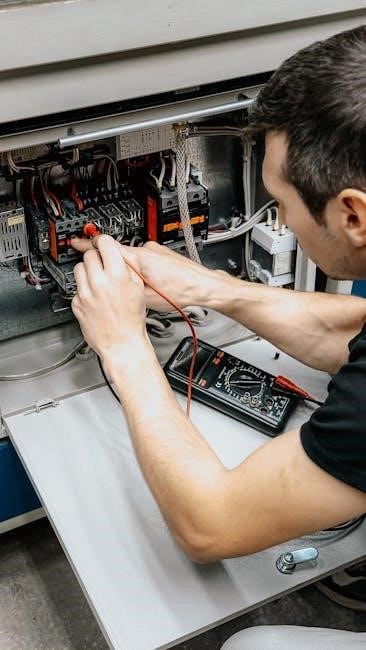
Manual ranging allows precise selection of the measurement range, crucial when dealing with very low voltages (millivolts) or high resistances where auto-ranging might be less accurate. Certain applications demand specific resolution; manual control provides that. Consider if you need to measure frequency, capacitance, or temperature – features often found in both types, but range control matters for core measurements.

Advanced Features & Considerations
True RMS, input impedance, and safety ratings (CAT ratings) are vital aspects beyond auto or manual ranging, impacting accuracy and user safety significantly.
True RMS vs; Average Responding Multimeters
Understanding the difference between True RMS and average responding multimeters is crucial for accurate AC voltage and current measurements. Average responding multimeters are suitable for purely sinusoidal waveforms, providing accurate readings when the signal is clean and consistent. However, most real-world AC signals are not perfectly sinusoidal; they often contain harmonics and distortions.
In these cases, an average responding multimeter will provide an inaccurate, lower-than-actual reading. True RMS (Root Mean Square) multimeters, on the other hand, accurately measure the effective value of any AC waveform, regardless of its shape. They calculate the RMS value by taking into account all harmonics and distortions present in the signal. This makes True RMS multimeters essential for working with non-sinusoidal waveforms, such as those found in modern electronic devices and power supplies. Choosing a True RMS multimeter ensures reliable and precise measurements in a wider range of applications, even if you aren’t sure about the waveform’s purity.
Input Impedance
Input impedance is a critical specification of a multimeter, particularly when measuring voltage. It represents the resistance the multimeter presents to the circuit being tested. A higher input impedance is generally desirable, as it minimizes the loading effect on the circuit. Loading occurs when the multimeter draws current from the circuit, altering the voltage being measured and leading to inaccurate readings.
Most digital multimeters have an input impedance of 10 MΩ (Megaohms), which is high enough for most applications. However, some specialized multimeters offer even higher input impedances. Lower input impedance can significantly affect measurements in high-impedance circuits. Therefore, understanding and considering the input impedance of your multimeter is vital for ensuring accurate and reliable voltage measurements, especially in sensitive electronic circuits.
Safety Ratings (CAT Ratings)
Multimeters are categorized by safety ratings, known as CAT (Category) ratings, which indicate the level of transient overvoltage the meter can withstand. These ratings are crucial for ensuring user safety when working with different electrical environments. CAT ratings range from CAT I to CAT IV, with higher numbers indicating greater protection.
CAT I applies to measurements on circuits with low energy, like those found in electronics. CAT II covers single-phase mains power circuits. CAT III is for three-phase power distribution systems, and CAT IV is for primary electrical supplies. Always select a multimeter with a CAT rating appropriate for the environment where you’ll be using it. Using a meter with an insufficient CAT rating can expose you to dangerous electrical hazards, potentially causing severe injury or even fatality.
Ultimately, the best multimeter—auto-ranging or manual—depends on your individual needs and expertise. For beginners or those needing quick, general measurements, an auto-ranging multimeter offers simplicity and convenience. It eliminates guesswork and reduces the chance of incorrect range selection, making it ideal for everyday tasks and basic troubleshooting.
However, experienced technicians or those requiring precise measurements in specific applications may prefer a manual-ranging multimeter. It provides greater control and potentially higher accuracy when used correctly. Consider your skill level, the types of projects you’ll undertake, and your budget when making your decision. Prioritize safety features and CAT ratings regardless of the type you choose, ensuring a safe and productive experience.